

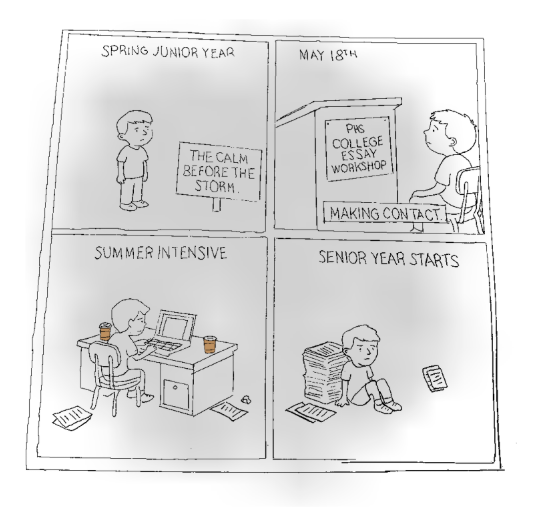















Some people are easy to talk to; others take a bit more effort. But sometime last year, it seemed like everyone forgot how to make normal small talk and learned just one line instead: “Where are you applying to college?” The nonstop college talk at PHS has become intrusive and damaging. We need to recognize how it feeds a toxic admissions culture and relearn how to connect over anything other than someone’s future alma mater.
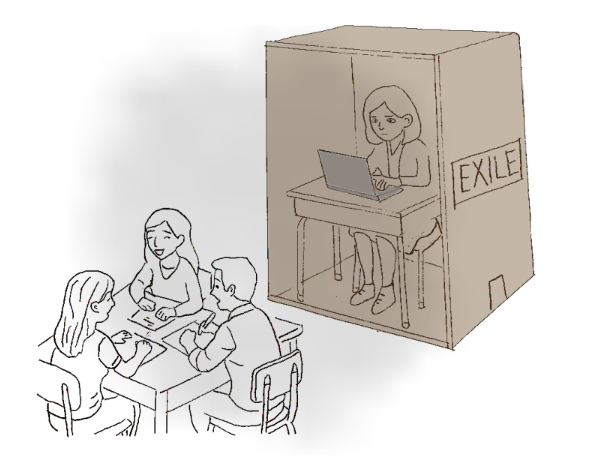
According to an APA analysis of 246 studies that included more than 41,000 college students in Canada, the United Kingdom, and the United States, all three of the forms of perfectionism increased over the study’s 28-year time span. Socially prescribed perfectionism spiked most dramatically. There is a societal shift happening. The “perfect student” has become an unattainable idea that lends itself to obsession by students and its leading to constant comparison on campus.
Although competition creates better work in the long run in any situation, the level of competition we have reached is eroding our happiness and enjoyment of life. This generation that can’t stop bouncing their legs during class, taping their feet, biting their nails, and obsessing over every decimal point on assignments needs a break.
Casual small talk has become “where are you applying?,” “what college are you EDing to?” “what is your favorite school?” It was bad enough when all we talked about were grades, APs, and rigor, but it’s gotten even worse. I consider myself a pretty easy person to talk to, but suddenly my conversations shifted away from “how’s life” and “what are your plans for the weekend” becoming an interrogation on what school I will be attending next year. It makes me feel uninteresting, and like all my worth is dependent on which school I go to.
This culture is so toxic that it has led many to lie about applications, ED’s, and where they are putting their efforts. College applications are a vulnerable thing. You are putting everything about yourself, your life, and your accomplishments on a PDF to be shipped off to a reader to determine, what feels like, your worthiness. This makes it incredibly uncomfortable and invading when people ask what schools we are daring to be vulnerable with.
We need to resume our simple conversations about things that don’t matter so much, and deep conversations about the things that really do, which is not just the school you go to. We need to work on prioritizing the mental health of juniors and seniors as they go through this tough time and recognize that having these conversations is not what is giving support but acts as a constant reminder of looming deadlines and rejections. It seems that the only thing we have to talk about anymore is college decisions. Prove me wrong. It’s time to become more interesting again.