


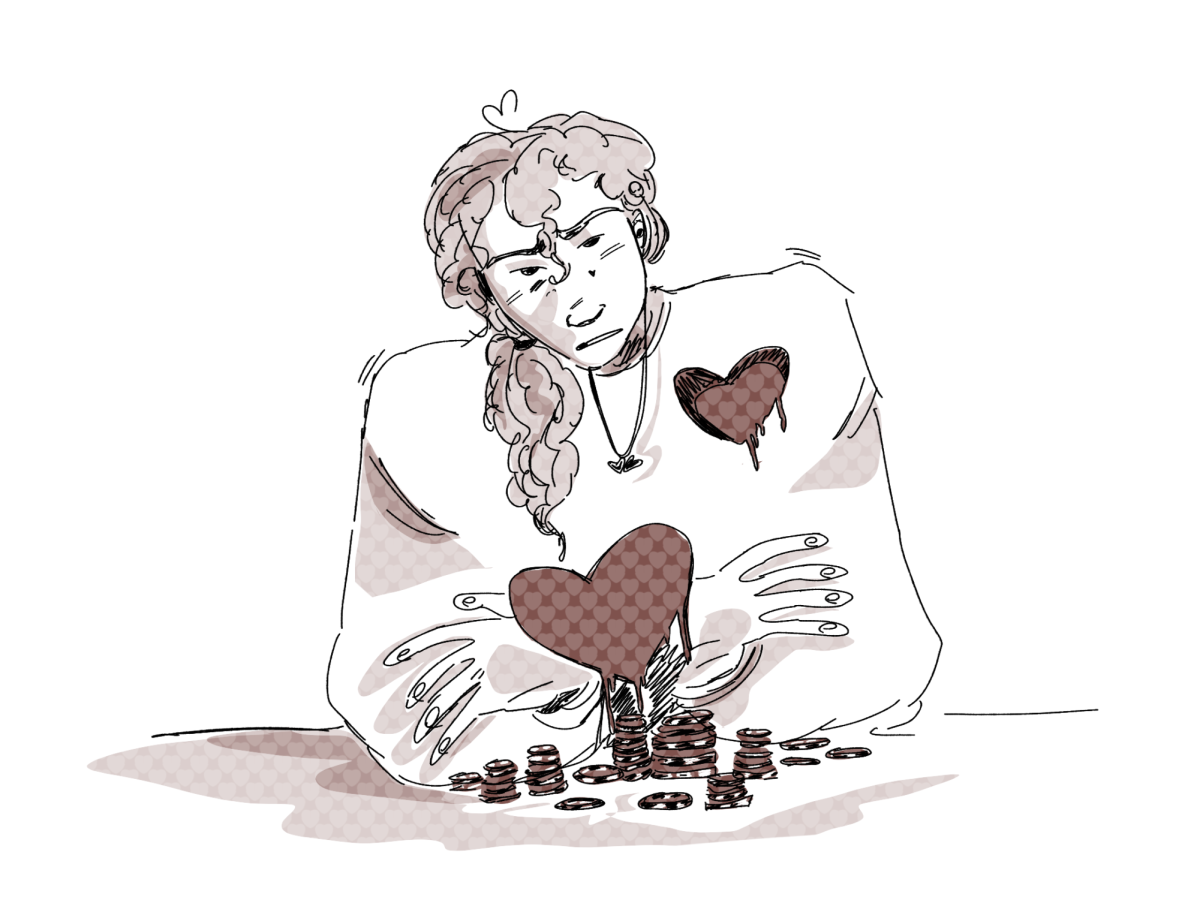















When people think about gambling, they think of casinos, poker chips and slot machines: an activity only common for adults. They do not think of a teenager in his bed after school betting money to win character skins.
For anonymous Piedmont alum Henry, this was his after-school routine throughout high school. Through multiplayer survival games like Rust, players are able to earn or buy items that help protect players, such as skins for weapons or armor. On third-party sites, players are able to wager their skins against other people with a facilitating bot for real money.
“Because it’s ‘just a skin,’ it doesn’t feel like real money at first,” Henry said. “It was so easy, just a click of a button and you’re betting again.”
Gradually, the money adds up either in gains, or in losses. While it was never a devastating loss, Henry said that the money built up over time.
“I once turned $20 into $120, and then a few days later I was back to zero,” Henry said.
Henry was spending his parents’ money on his account, so when they discovered what he had been doing, they were not happy.
“Their card was linked to my account, so I was spending their money without them realizing,” Henry said. “My parents found out when the credit card bill came and they were pissed.”
According to Right as Rain by UW Medicine, gambling apps are designed to activate our brain’s rewards system by triggering the release of dopamine, which, when it fades, causes psychological distress that we want to relieve by doing more of the activity. They then immediately prompt you to keep going, with push notifications encouraging you to play another game.
“I could lie in bed, put $10 on blackjack, and gamble instantly,” Henry said.
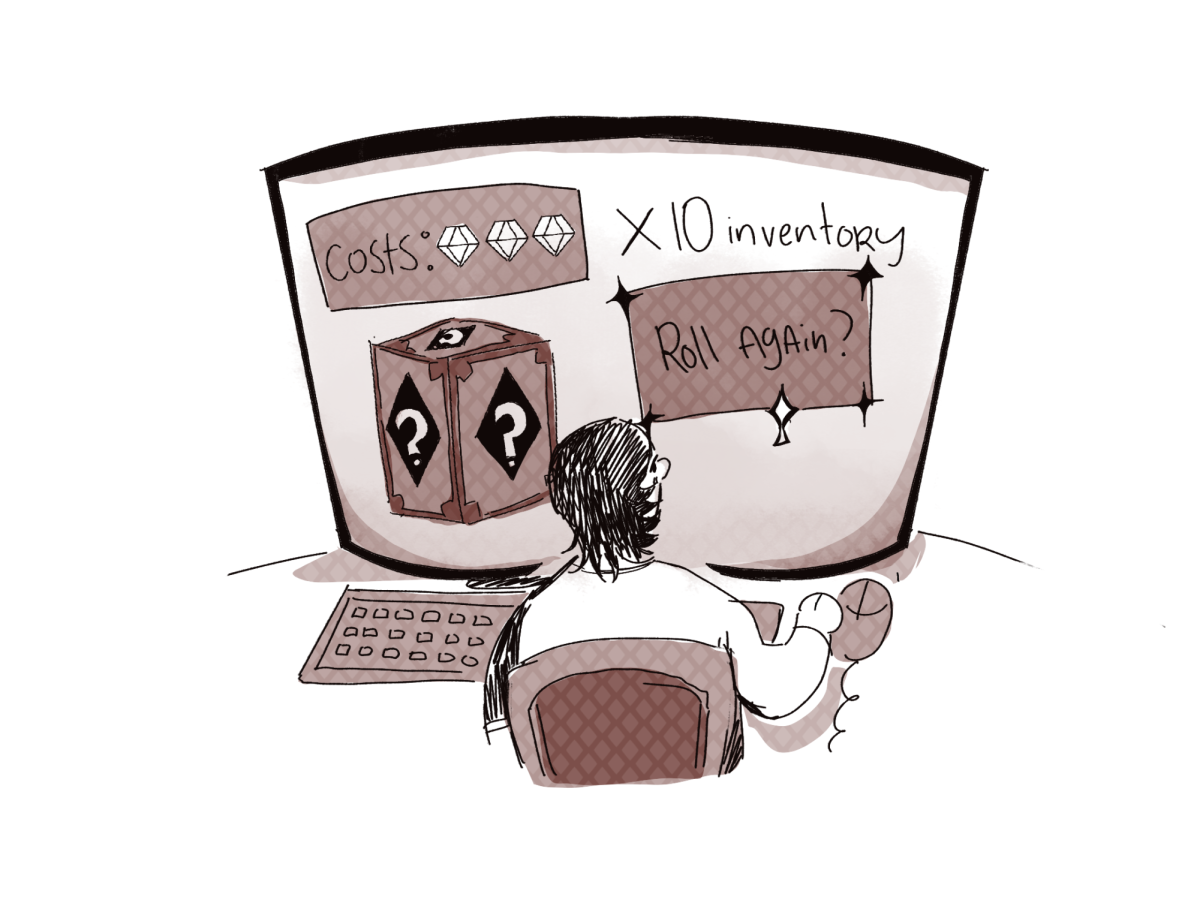
According to Forbes, video games used to be a one-time purchase, but have evolved into more as a service, with companies often providing their app for free and relying upon “loot boxes” and microtransactions like in-app purchases to create revenue streams.
Over time, this has changed even more with the rise in popularity of battle passes. Battle passes are season-long passes a person can buy that consists of skins, weapons and other items. These are reward systems based on how much a person plays a game, so the more a person plays, the better items they unlock. This has helped one-time purchases within games increase player engagement.
With games acting as a service to adolescents, they are often designed to inspire a “pay-to play” mentality: encouraging players to maximize spending as a perceived path to victory within games and making consumers engage in gambling behavior in order to progress within the game.
Once kids get older, they are less likely to participate in this form of gambling, but alternative options are still limited, even as adults.
“Once [my friends and I] turned 18, [we] were able to buy cryptocurrency,” anonymous senior Reed said. “Since there are a lot of restrictions in the US that [prevent] you from going to most gambling sites and using your own money, it’s kind of the only way to do some gambling.” Even with age restrictions on gambling, minors are still able to find a way around them.
“Sometimes younger kids ask us to buy crypto for them so they can still use the sites. That’s one way people get around the age limits,” Reed said.
Anonymous senior Adam said on Degen Spin, a betting app based on a mechanical coin flip, that he won 170 dollars in ten minutes and then lost it all right after.
“The money doesn’t feel real when you make it in ten minutes and you are just flipping a coin,” Adam said.
With a promise to immediately win money, apps can suck people into buying them.
“A lot of people get into sports betting when they turn 18 because apps give you free promos that hook you in,” anonymous senior James said. “Once you start using those sites, you’re kind of set up to lose.”
Even before a person turns 18, there are ways to get around age restrictions with sports betting.
“Even though it’s not legal under 18, there are plenty of ways to get around it: VPNs, third party websites, and apps that don’t look like betting at first,” anonymous Piedmont alum Caleb said. “Some apps start you with fake money or coins, then it slowly turns into real money. That’s how a lot of people get hooked.”
Players receive $25 to get a friend to download their sports betting app. This usually results in the friend getting addicted to the game, even if they might not have sought it out in the first place.
“A lot of people I know joined because of referral bonuses. Their friends wanted the money, so they convinced them to sign up,” Caleb said.
Caleb started sports betting in ninth grade and has continued ever since. Over time, he has refined his betting to mostly basketball and football, but when he first started, he was betting more broadly.
“At this point, I mostly bet on sports I don’t even follow, and weirdly, I win those more often,” Caleb said.
Sports betting usually has more expensive bets, so the losses tend to be greater too.
“The most I’ve lost in one sitting is somewhere between $500 and $1000,” Caleb said.
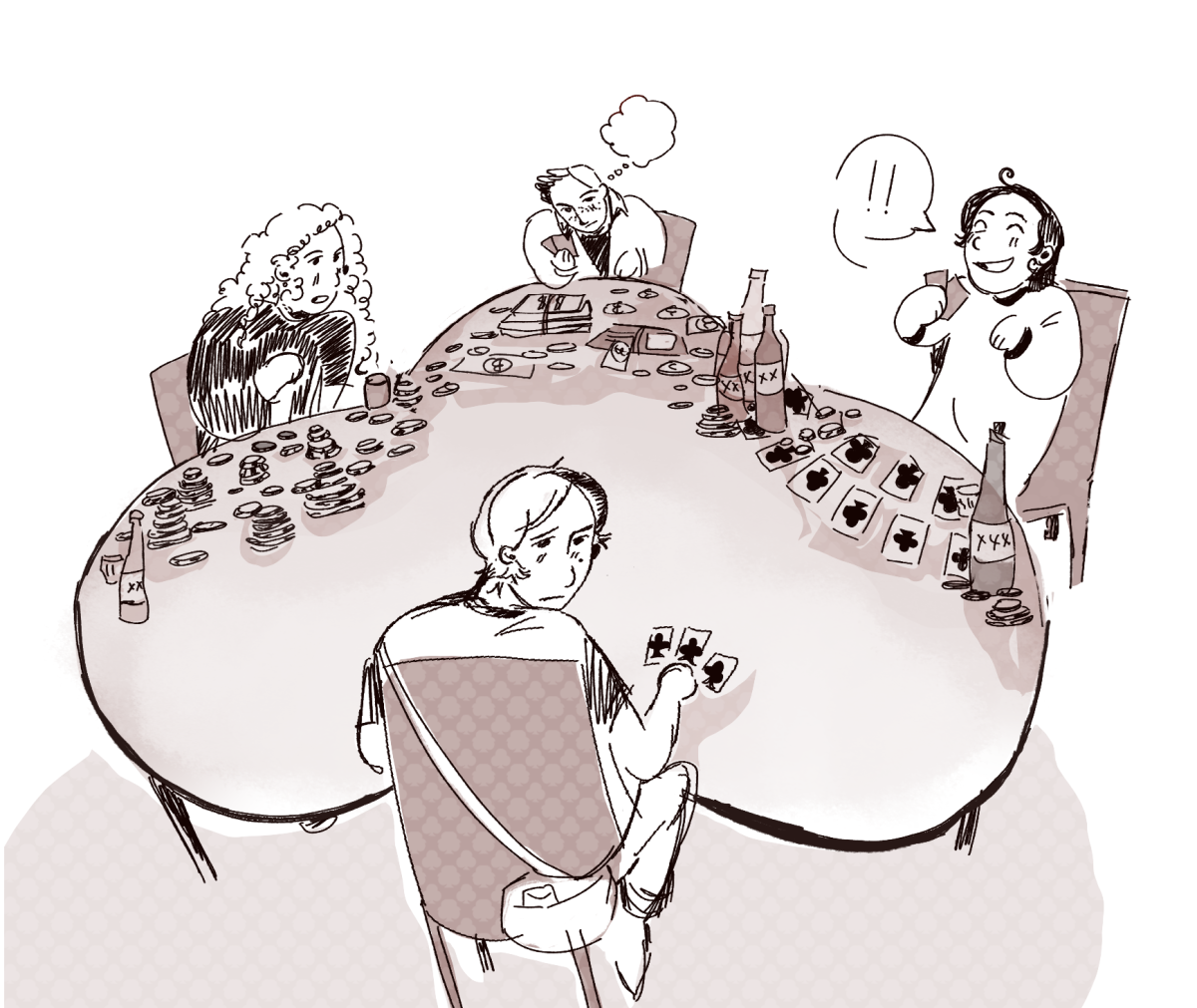
According to The University of Wisconsin Madison, the gambler’s fallacy is the mistaken belief that past events can influence future events that are entirely independent of each other in reality. This is common with games of luck; for instance, in roulette, players will believe that because the wheel has landed on black ten times in a row, red is now more likely to happen.
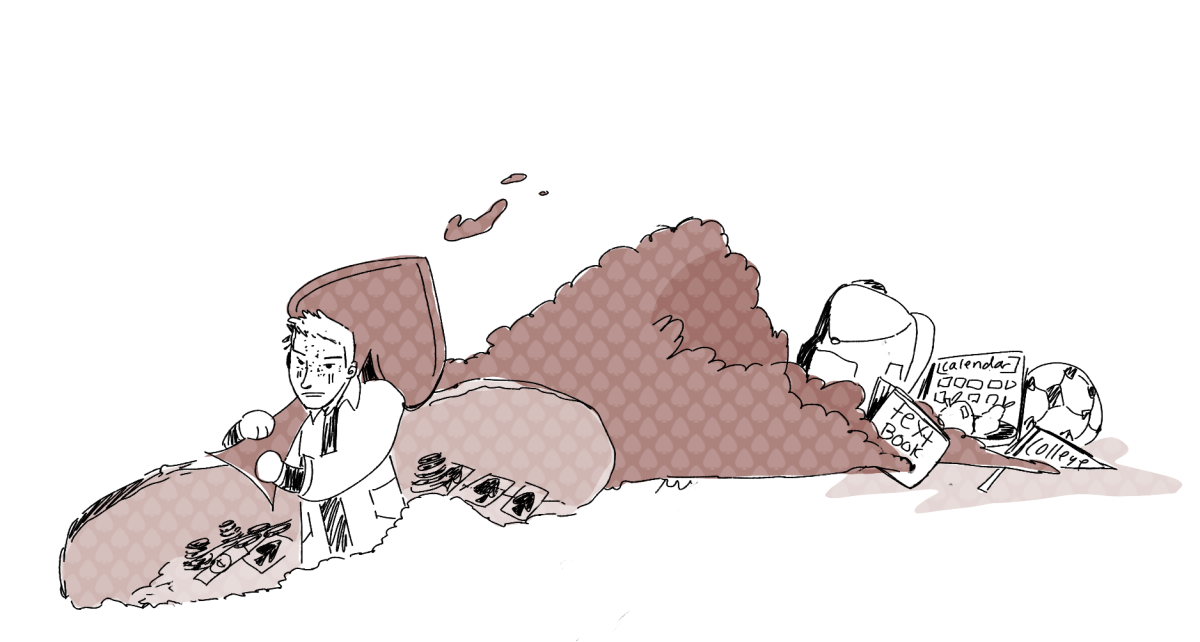
After losing, people keep believing they will win back what they have lost, leading them to spiral further into a destructive cycle.
“Chasing losses is the worst part, and that’s how they get you. You lose money and feel like you can win it back, but that’s when things spiral,” Caleb said.
As the mindless addiction sets in, Caleb said that there are two reasons people keep on playing.
“There are two feelings that keep you going: when you win, you want to win more, and when you lose, you feel like you can win it back,” Caleb said.
Gambling is commonly thought of as an activity requiring no skill and all luck, but for sports betting, that is not always true.
“I think sports betting is a mix of skill and luck, but mostly skill, if you put in the time to study stats and analytics,” Caleb said. “I’ve definitely gotten better over time, but it takes a lot of time and experience to even feel like you know what you’re doing.”
People keep on playing even through the ups and downs because of the excitement.
“It’s just adrenaline-boosting, and there’s lots of highs and lows,” anonymous senior James said.