





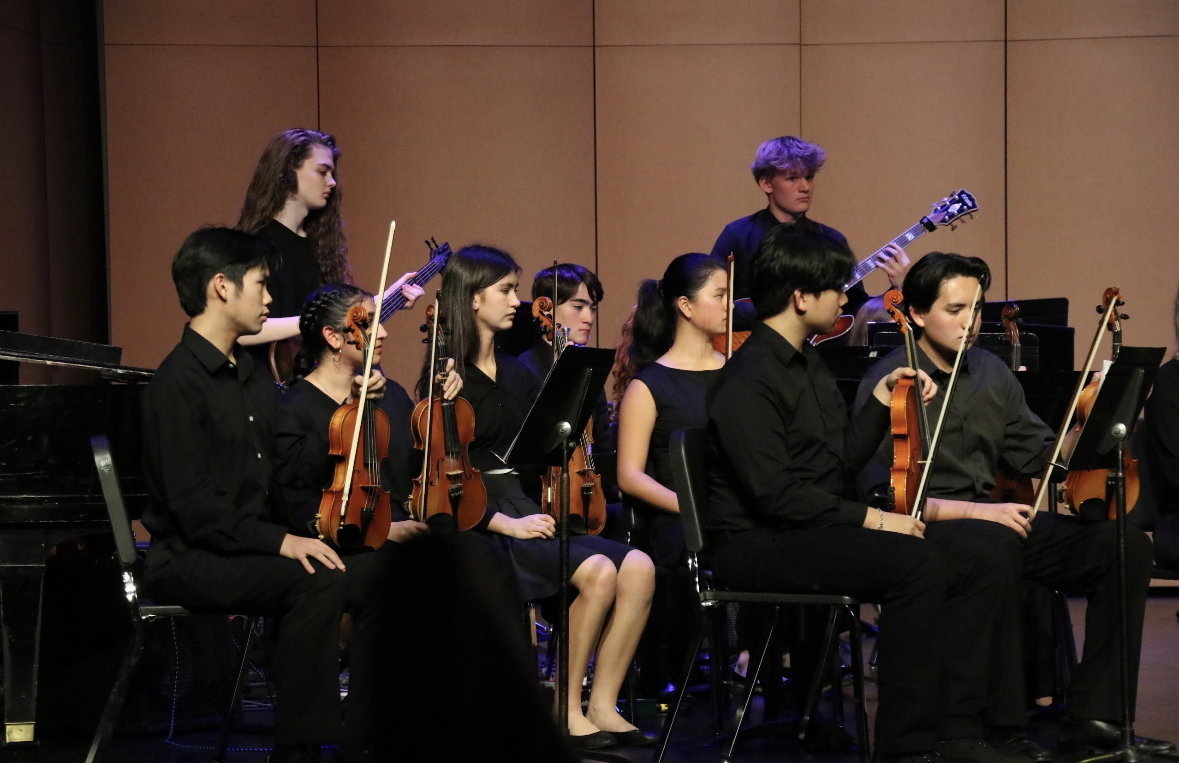



When I picked up a guitar for the first time, my chords sounded truly, genuinely awful. My fingers struggled to hold the chord formations, and my mistakes were only augmented when I tried to switch between chords and play complete songs. But I stuck with it. Two years later, I can play many of my favorite songs on guitar from just a glance at the chord progressions. For students and adults alike, I strongly recommend trying to learn a musical instrument– it may seem impossible at first, but practice really does make progress.
One of the biggest issues when it comes to learning a new instrument is the idea of timing. As a high school student, I have sports taking up hours of my time after school. I have a job, which takes six to eight hours a week, plus time spent driving there and back. I have homework, studying, extracurricular activities, and obviously a need to eat and sleep. There was no time in my schedule for me to fit weekly guitar lessons, nor did I have the money to pay for them. The solution? I taught myself.
Whenever I had free time, on evenings after practices or in the morning before school, I’d mess around on my brother’s guitar. I memorized chord charts, practicing basic progressions over and over until my fingers easily slid along the strings. I couldn’t use guitar tutorials on YouTube since I’m left-handed, meaning I was playing the guitar upside down. I was forced to teach myself everything with my only resources being chord diagrams off Google and my own repetitive practice sessions. But when I say it paid off, I mean it.
While learning to play guitar, I was constantly forming new connections in my brain between my finger placement and the resulting sounds, allowing me to understand the guitar beyond basic chords. It’s one thing to have a Dm fingering memorized, but it’s another to be able to form an Cmaj9(#11) from just hearing its name. According to the National Institutes of Health, the synaptic connections made through learning an instrument can have lifelong health benefits, especially regarding auditory neural function and language-based abilities. These mental benefits, formed through the back-and-forth conversations between person and instrument, are just one part of the advantages of learning an instrument.
As someone who loves music, being able to play an instrument creates a channel for me to play my favorite songs and get to know them on a deeper level. Although I have played the piano since I was five, there is a stark difference between piano and guitar in terms of tone, feel, and so much more, so playing piano didn’t satisfy my needs. The same chord progression played on two different instruments can feel completely different, and the prevalence of guitar in modern music made it the most natural step for me musically.
Every instrument is a pathway to exploring and understanding music in a different way, and the connections made through music can last a lifetime. My ability to play guitar exists when I’m working out a new song on my bedroom floor, but it also exists on a Friday night around a campfire, surrounded by the singing voices of my friends. Learning an instrument is hard. But those minutes and hours of practice don’t diminish—instead, they build up. Out of all of the random hobbies and activities I’ve tried over the years, I am certain that music will follow me wherever I go, giving me unparalleled opportunities to grow and create.