
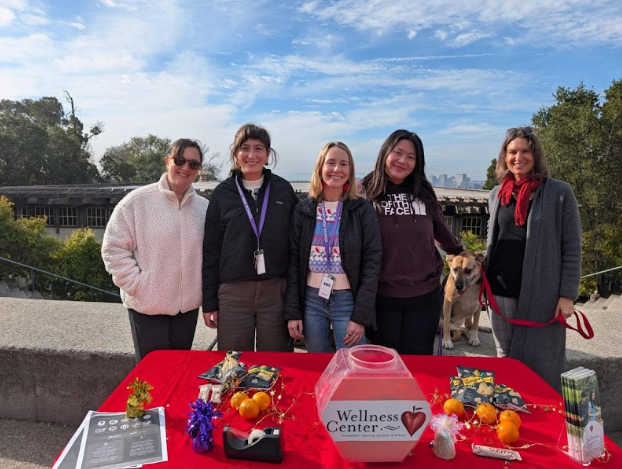







Every day, hundreds of students at PHS interact with one another. Whether it’s collaborating on a group project or asking to borrow a pencil, these connections are constant. However, even after years and years of coexistence, most students know little about each other on a deeper level. Through community building circles, the Affinity Mentorship program is bridging this gap.
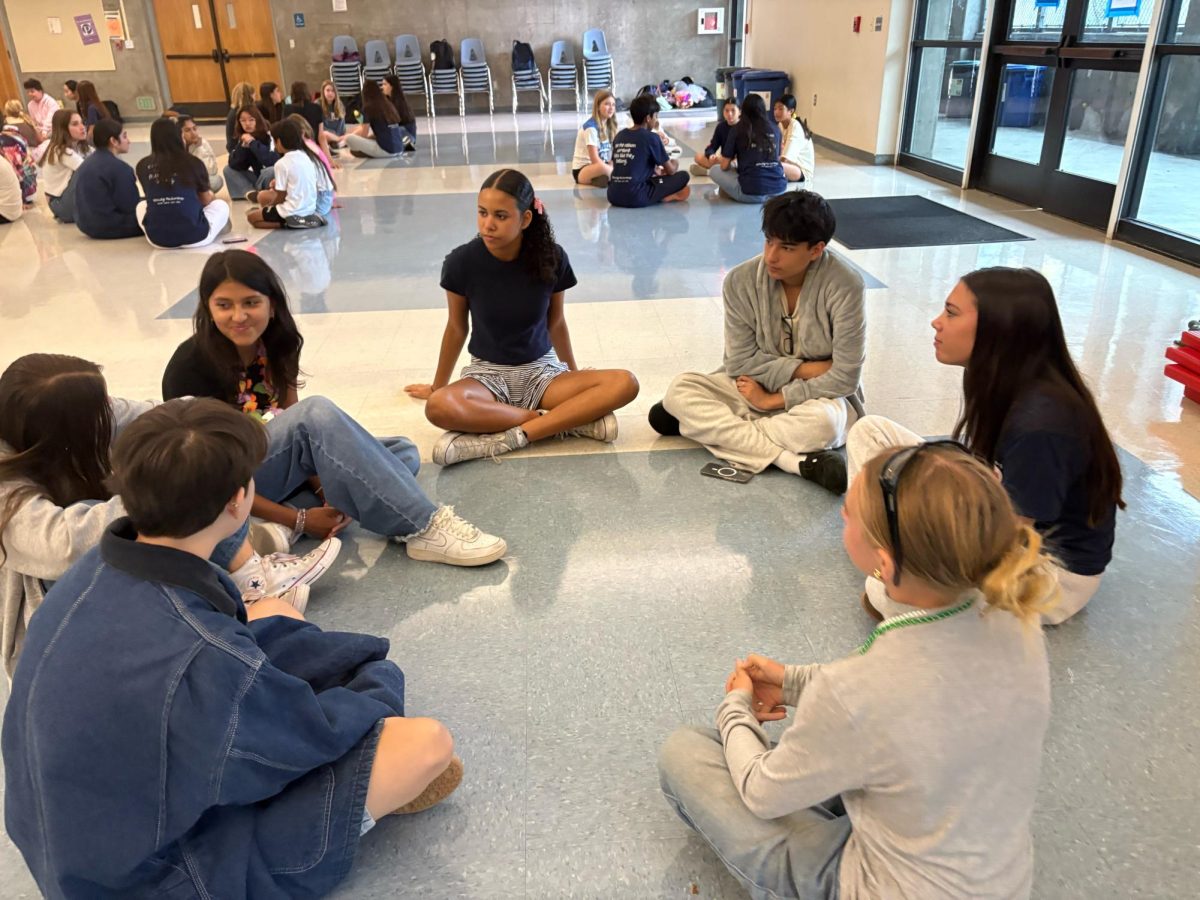
DEIB Director and Affinity Mentorship teacher Jean Takazawa said that community building circles give students the opportunity to learn more about one another. In these circles, everybody has an equal chance to share, as students sit facing one another and pass a talking piece.
“They are meant to create community and invite everyone to be in an environment where they can feel seen and heard,” Circle Keeper sophomore Amalia Angulo said.
Circle Keeper sophomore Olivia Stevens said that she has undergone training to become a circle keeper, along with many of her peers.
“This type of training includes practicing active listening, guiding conversations and ensuring everyone feels included and valued, and building conflict resolution skills,” Stevens said.
Angulo said that there is a set of rules and requirements for belonging circles. For example, students must pass a talking piece clockwise in each circle, moving it in the “direction of the heart”.
“We try as much as possible to help others feel seen and heard, and we do that by being vulnerable with them, because if we’re able to be vulnerable with them then they’ll feel more comfortable being vulnerable with us,” Angulo said.
Takazawa said that students who don’t usually speak up in class get a chance to share in community circles, and also have the structure to be able to think about what they are going to say.
“We don’t let people interrupt, so it’s a practice of listening,” Takazawa said.
Restorative circles, also led by Affinity Mentorship, are held when harmful situations occur between students. Instead of simply disciplining students, the district leans into restorative practices to allow students to talk through what has happened and work towards understanding.
“When things happen that cause harm, we don’t just discipline people and say ‘you’re all done’,” Takazawa said. “We really believe that every incident, there’s an opportunity for learning and repair for those who’ve been harmed.”
Takazawa said that a restorative circle was held to help students process after a fight broke out at the Jan. 30 boys basketball game.
“We just want to make sure that whenever things happen between students, that students have the ability to engage in a conversation that actually repairs harm between the two different parties,” Takazawa said. “[The circle regarding the fight] was open to the entire school, and whoever wanted to could come, but it’s optional.”
Stevens said that the focus of restorative circles is to repair harm, restore relationships, and make sure students take responsibility for actions.
Takazawa said that Affinity Mentorship also holds circles at PUSD middle and elementary schools after they give presentations or lessons.
“Whenever we have a lesson, we always sit in a circle after,” Takazawa said.
Sophomore Sophia Puckett said that she believes circles are beneficial to younger kids as well.
“I’ve given a presentation at the middle school about the power of words or about belonging, and also I give presentations to a small group of kids at an elementary school,” Puckett said.
Takazawa said that the act of sitting in a circle is beneficial to conversation as well.
“When you sit in a circle, everyone is actually facing each other, so you’re seeing each other instead of looking at someone’s back,” Takazawa said.
Takazawa said that although circles are mainly held through Affinity Mentorship, she’s open to training anyone who wants to lead circles.
“The leaders that end up getting trained are the kids who are in Affinity Mentorship, just because they’re already with me,” Takazawa said. “However, in the past, I’ve opened it up to anybody that’s wanted to get trained.”
Junior Kirstin Fedor said that community building circles have helped her feel closer to her peers.
“It’s nice to get to have open conversations with classmates on a deeper level,” Fedor said.
Angulo said that the overall goal of circles is to get students to share their experiences.
“We accept everyone’s opinion and try to embrace it,” Angulo said.