








Spain Before
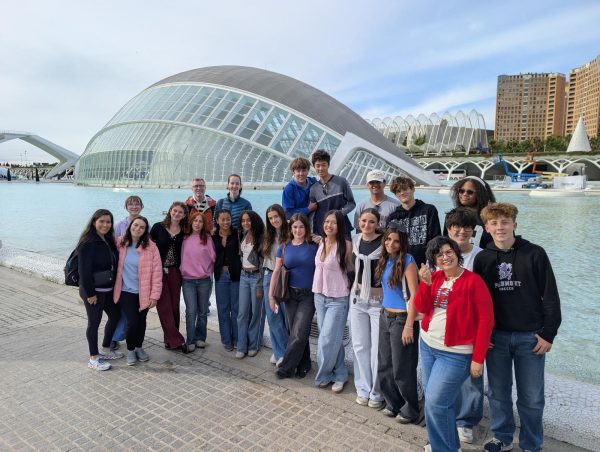
According to the PHS Spain Exchange Itinerary, Spanish students will arrive in Spain on April 3 and spend the first three days sightseeing in Barcelona. Then, students will attend school with their host students for the remainder of the week and spend the weekend with their host families. The group will then travel to Valencia and spend one day there.
“We’re going to sight-see different places [in Barcelona], like La Sagrada Familia. That’s one of the popular ones,” Spanish teacher Deysi Sahagon said.
According to the PHS Spain Exchange Itinerary, students in Spain will visit many iconic neighborhoods and streets in Barcelona, including Parc Güell, Las Ramblas, and Barri Gòtic, as well as watch a flamenco show, tour the Olympic Stadium, and try churros with chocolate.
Marshall said she is excited to improve her speaking skills for the chosen language during the exchange program.
“I’m most excited about experiencing the new cultures,” sophomore Ida Marshall said.
In Valencia, students will visit the Oceanographic (the largest aquarium in Europe), the Fallaero Museum, and the Mercado Central, one of the oldest markets still in Europe, according to the PHS Spain Exchange Itinerary.
Sahagon said students feel more excited and motivated to practice their Spanish after the program.
“Students have the chance to get immersed in the language for a week with a family in Spain, and they have the chance to practice their Spanish,” Sahagon said.
Sophomore Nylah Kim said she’s excited to reunite with her exchange student in Spain.
“We got really close when she was here, and we miss each other so much. We send each other videos every day,” Kim said.
Sahagon said that teachers try to pair students who share interests.
“We try to match [students] as closely as we can according to their likes or dislikes or activities that they have in common,” Sahagon said. “ It’s successful when the students try to interact as much as they can with their partners.”
According to the PHS Spain Exchange Itinerary, the purpose of the program is for students to truly explore, understand, and dive deep into another culture and language.
Spain After
According to the PHS Spain Exchange Itinerary, students flew home from Spain on April 14.
“I think it was a great experience,” Sahagon said. “[The students] had a blast.”
Kim said that she learned a lot from the trip.
“My favorite part was meeting my exchange family because they were so sweet, and I’m still in contact with them. I love them so much.” Kim said.
Sophomore Lauren Udovch said that the lifestyle of high school students and the school system is really different in Spain.
“They’re all best friends with their teachers,” Udovch said.
Sahagon also noticed differences between the US and Spanish schooling systems.
“Here, the students come to the classroom for each class, but over there, students have one classroom, and the teacher comes to them,” Sahagon said. “They call all the teachers by their first name.”
Kim said that she mostly spoke Spanish while in Spain, although her exchange family had good English.
“Some of my friends struggled because their [exchange] families didn’t have good English,” Kim said.
Sahagon said that students’ Spanish improved a lot.
“They learned to practice their language, and they also learned a different perspective,” Sahagon said. “You know, a different culture, how people in Spain live, their lifestyle, their home, their family, the activities they do as a family, their routine, their meals, all different perspectives.”
France Before
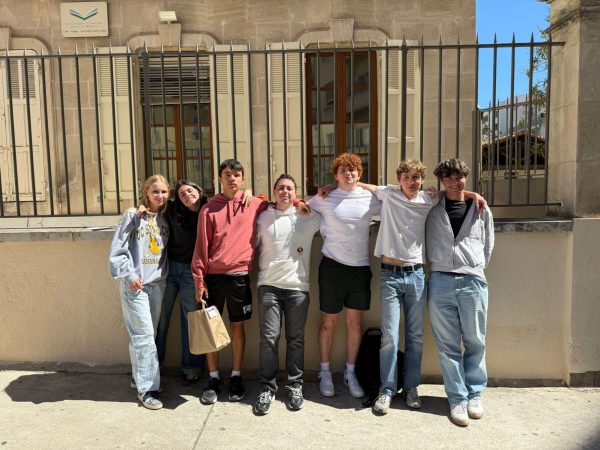
French students will arrive in France a day later than Spanish students, on April 4, and attend school with their host students until April 8. Then they will spend two days in Marseille and Aix-en-Provence before visiting Paris for two days, according to the PHS France Exchange Itinerary.
“We’re going to a different city than we went to last year,” French teacher Bryan Smith said. “We’re going to Marseille, and last year we went to a different town called Meaux in France.”
Junior Daniel King said he’s excited to explore the city with his friends.
“I’m excited to explore their culture and what it’s like to live there. When you go to Europe, you see it looks very different from America,” King said.
According to the PHS French Exchange Itinerary, students will visit the Château d’If, one of the locations in “The Count of Monte Cristo” by Alexandre Dumas. They will also go on a boat cruise and visit the Old Port of Marseille.
“I’ve never been [to Marseille] before, so it’ll be my first time, and I’ll get to experience it with the students,” Smith said. “I think that should be really nice.”
Students will visit cathedrals and markets in Aix-en-Provence before taking a TGV high-speed train to Paris, where they will climb the Arc de Triomphe, according to the PHS French Exchange Itinerary. They will also visit the Sainte-Chapelle, the Champs-Élysées, and take a boat cruise on the Seine.
“I hear there are a lot of beaches there, so I’m excited for that,” junior Miles Lee said. “I’m excited to see the schooling system because I heard they go to school for like 10 hours a day,”
Lee said there wasn’t a language barrier when he spoke English with his exchange student while visiting Piedmont, but it was harder to speak French.
“When I was trying to speak French with him, there was more of a barrier, and I think that’ll improve more when I’m in France, because I’ll be speaking more French,” Lee said.
Smith said he’s excited for students to experience day-to-day life in France.
“I’m excited for them to be able to see what daily life is like staying with their host families, like, what do they eat for breakfast?” Smith said.
France After
According to the PHS France Exchange Itinerary, French students flew home on April 12.
Lee said the trip was more fun than he expected because his host family was so nice.
“I mostly learned about the history of Marseille, and a little bit of French slang,” Lee said.
Smith said it’s important to pair students who will want to talk so they have opportunities to grow as language speakers.
“If they get matched with someone with whom they don’t get along, they may not really want to talk to them, and then they wouldn’t get as much practice, and maybe not as much experience as they might with a good match,” Smith said.
Lee said he liked getting to know his exchange student when they visited.
“He had a lot of similar interests as me, I thought that was really cool,” Lee said.
Smith said that, in addition to improving their knowledge of the language, the program helps students understand why learning a foreign language can be beneficial.
“It shows students that there are real-world connections to what we’re learning,” Smith said. “When we go to France, they’ll get to see why they should learn or spend time learning French, because if they didn’t do that, then they wouldn’t be able to communicate with anyone.”
Briding the Bay and French Clubs
On March 20, Bridging the Bay Club hosted the French exchange students in a collaboration with the French Club, bringing students together to discuss cultural differences and daily life in France and the United States.
During the meeting, students participated in small-group Q&As, snacking on French treats and other snacks. These discussions allowed students to ask about topics ranging from school systems to everyday life in France versus America, said club advisor Shelley Seto-Rosen.
“They got into small groups, so people could really have personal conversations,” Seto-Rosen said. “They talked about their time here in the Bay Area, how their school is different, and how their life is different.”
The event reflects Bridging the Bay’s broader mission to promote cross-cultural understanding through student-led presentations, guest speakers, and interactive meetings. For Bridging the Bay vice president Will Hinman, the discussion challenged some of his preconceived ideas about life abroad.
“One of the most surprising things was how different the education system is in France, and then also, like, how rigorous it is,” Hinman said. “I think they get to school at around 8, and they go until, like, 6 PM. A lot of people think of Europe as more relaxed, but that isn’t really the case.”
Hinman also said there are differences in healthcare, which he hadn’t previously known about. These comparisons are a central part of the club’s purpose.
“I think it’s important to compare cultures and see how we’re similar and different,” Hinman said. “There are things we can learn from other countries, and things they can learn from us.”
French Club secretary junior Devon Thai said that direct interactions are important for breaking down assumptions.
“People think they know a place until they actually interact with people from there,” Hinman said.
Beyond special events, Bridging the Bay typically focuses on researching various countries, hosting guest speakers, and learning more about their cultures and economic systems.
“It’s very inclusive,” Seto-Rosen said. “Anyone is welcome to come and learn about different cultures.”