










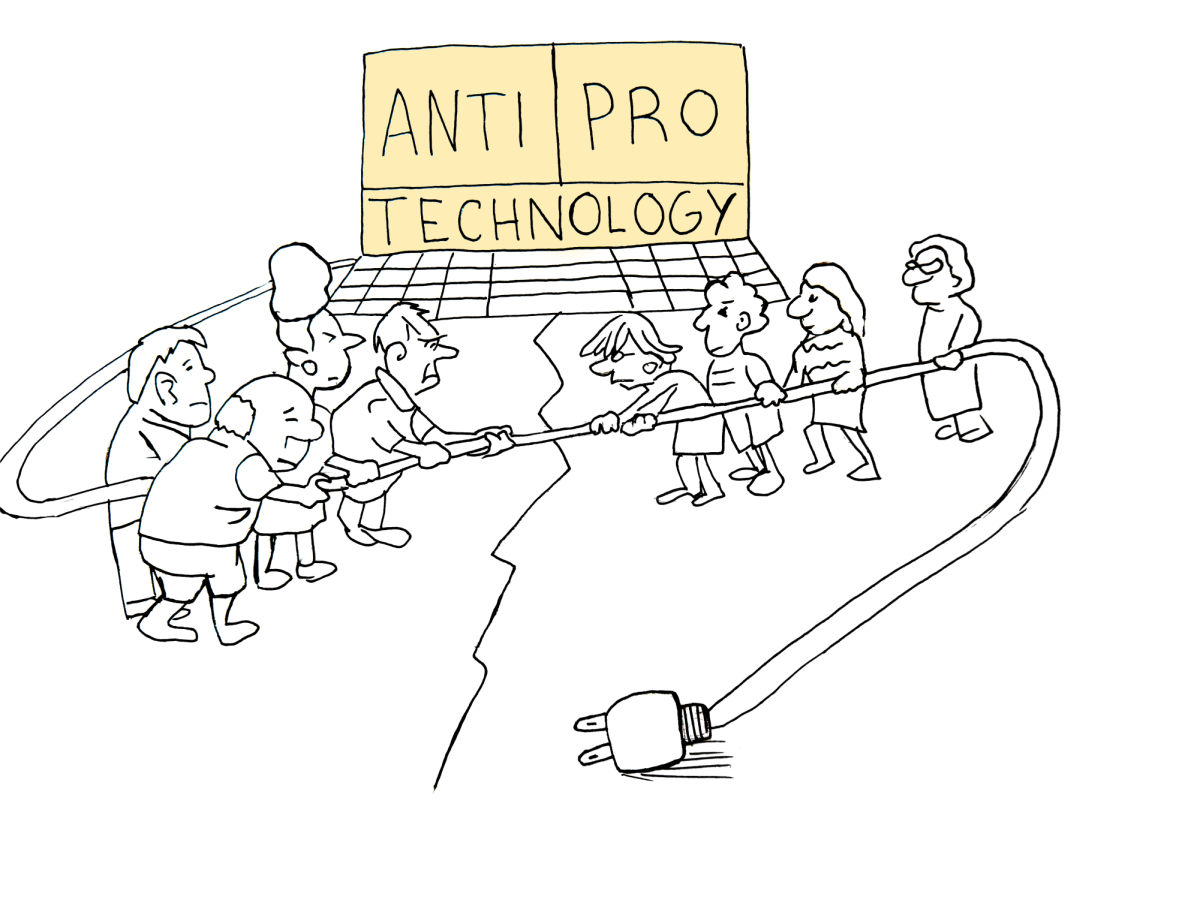



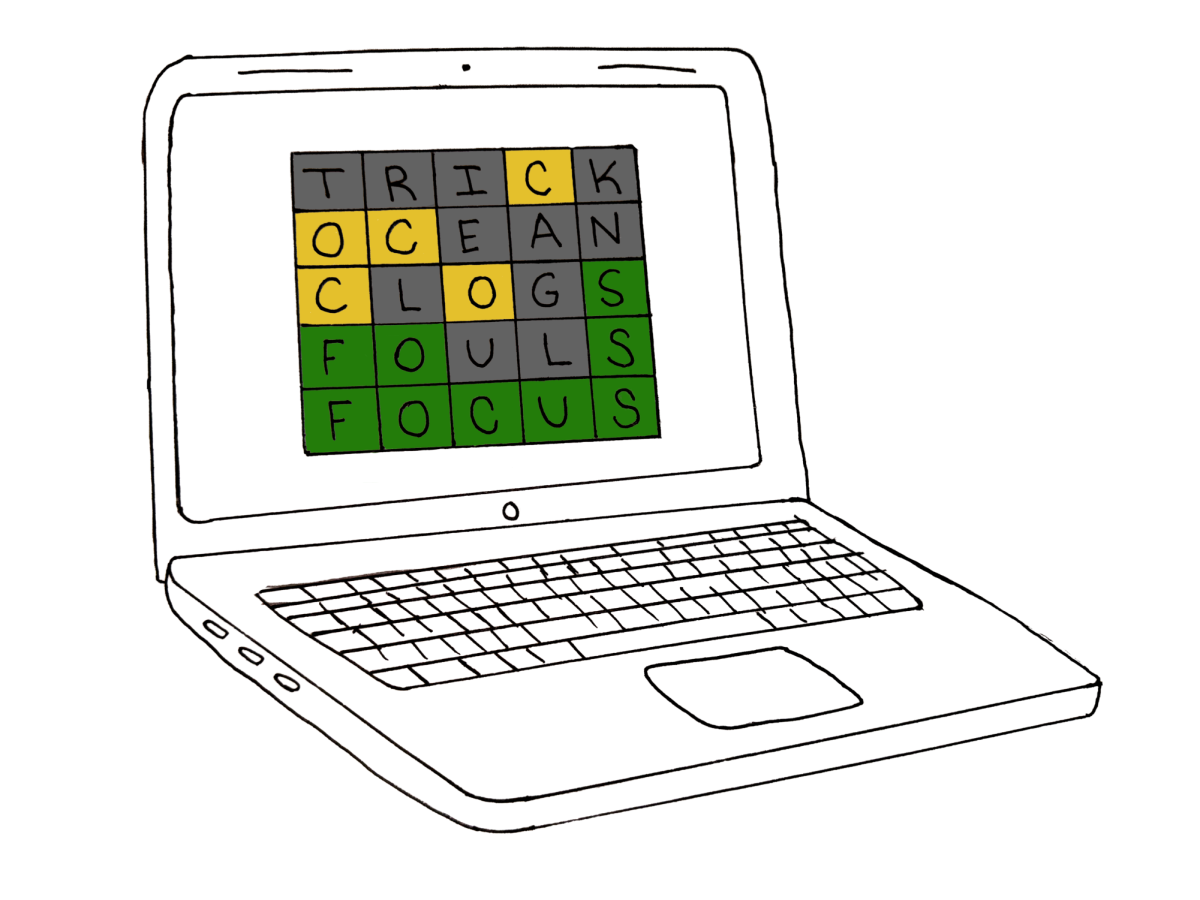
The Board of Education will be conducting an audit on student technology and phone use this Spring to understand how students utilize technology and if warranted, to reassess the extent of student technology use.
Superintendent Dr. Jennifer Hawn said that the major concern is that kids are using technology for non-instructional purposes.
“We have a lot of parents and even staff who are concerned that kids spend a lot of time on the Chromebook, but not always for learning purposes,” Hawn said. “All of their downtime, they’re on games, sometimes even during class.”
Students said that they admit to occasionally engaging in unfocused technology use, but believe that it is still more beneficial overall.
“Obviously, sometimes I get distracted by games on my Chromebook, but more often than not, having a Chromebook is better,” freshman Robby Koch said.
To combat this, sophomore Dean Kvoriak said that the district has tried to crackdown on computer games by blocking websites. However, he said that he finds it hard for the district to control websites effectively.
“It’s so hard to make it fully effective, because people just find new sites that aren’t blocked, and then staff have to go through and block those new sites again, which is an ineffective use of time,” Kvoriak said.
Hawn said that the goal is not to ban technology, but to find ways to minimize unnecessary use.
“We’re not auditing our computer science program. We’re not changing the way the middle school uses tech. The elementary school does a K-5 scope around technology. We’re keeping all of that,” Hawn said. “We just don’t want you to be required to use tech when it’s not the most useful tool.”
The District Technology Advisory Committee (DTAC) has drafted an instructional technology plan through the 2030 school year.
According to the draft, by 2030, PUSD will empower students through deep learning and impactful instruction, leveraging technology with purposeful use. Students will demonstrate skills in critical thinking, digital literacy and AI readiness essential for a complex world post high-school.
This pedagogical approach to technology, which focuses deeply on the strategies and techniques of learning, would be incorporated by instituting more evidence-based instructional practices with technology such as flipped learning and interactive video.
While Piedmont is refining its technology usage, some schools are deliberating whether it should be used at all. At the Waldorf School of the Peninsula in Mountain View, CA, there is a strong emphasis on eradicating technology use in classrooms until middle school.
“Technology in other schools is totally overused,” said Waldorf School math teacher Lisa Babinet. “It’s like when computer games to teach facts came out. They did a study and they found that kids weren’t doing any of the learning at all. They were just playing the game.”
Contrary to this, Havens and Beach Technology Coordinator Sun Lee said that elementary schoolers can benefit greatly from learning how to use technology at a young age. Lee said that elementary schoolers are taught fine motor skills, Google Apps, typing, and how to create independent research projects.
“By the time they head off to middle school they have learned a variety of skills in many different applications that transition nicely into secondary school,” Lee said.
Additionally, Kvoriak said that learning technology at a young age is essential for one’s future.
“Teaching technology to young students establishes the pillars of how to effectively use it throughout their life, and will make it easier for them to learn new things as they get older,” Kvoriak said.
This effective use of technology is exactly what Piedmont Unplugged, a parents group, has been advocating for at numerous school board meetings.
“The group was founded by Piedmont parents who want to be thoughtful about technology used in their children’s lives, and supports the idea of minimizing technology in schools,” said co-founder Amanda Straub.
According to Piedmont Unplugged’s website, the group is comprised of 11 Piedmont parents. The group’s four fundamentals include: no smartphones until high school, fully cell-phone free schools, no social media until 16, and more real-world independence.
Lee said that Piedmont elementary school students are first introduced to technology at a young age, with technology class starting in the first grade, and Chromebook use starting in the third grade. Individually issued Chromebooks are then provided in the 6th grade.
“I would really like to see [the board] rethink giving 6th graders ChromeBooks that they need to take home and do homework on everyday and that are extensively used in classes,” Straub said. “The middle school parents I talk to all say that their kids get distracted by it a lot in class and also while doing homework. It’s hard when it’s not out of sight, out of mind.”
This presence of technology has also enabled the increasingly widespread use of AI among Piedmont students.
“We’re not really being taught the ways that AI can actually be beneficial, as opposed to just detracting from our experience,” Kvoriak said.
The DTAC has acknowledged this gap. The 2017–2020 technology plan lacked sufficient focus on AI, with one vague subgoal to introduce tools like Gemini and MagicSchoolAI. However, due to rapid AI growth, widespread social media use, and increasingly digital student lives, DTAC found it did not address current needs or shifts in the graduate profile. The new plan instead places a heavy emphasis on digital literacy and AI readiness.
PMS 8th grader Cambell Miller said that this shift is necessary.
“I think we should be taught more how to use [technology] to our advantage. If we were taught how to use it better, then it would be even more helpful,” Miller said.
Babinet said this literacy-based approach is central to Waldorf education.
“A good position to share with Piedmont is that if a student does not know how to use Desmos, they are handicapped when it comes to taking the PSAT and SAT,” Babinet said.
Babinet said that she brings computers into the room to teach them necessary and advantageous skills like those, rather than allow students to use technology as they wish.
“When it’s needed or helpful, we’ll bring them in very consciously, but very sparingly,” Babinet said.
Piedmont is additionally considering implementing further phone restriction bans by installing Yondr pouches. Yondr pouches are designed to completely restrict phone usage by locking them mechanically.
As part of the current cell-phone policy at PHS, phones are expected to be put in phone hotels in every class, away at brunch and passing periods, with lunch being the only time allotted for phone usage.
“We are happy that a more restrictive policy has been passed at the high school,” Straub said. “We would love the ban to extend throughout lunch too, to the extent practicable.”
Despite some support, the idea of a Yondr pouch on the daily has stirred backlash among students.
“I think that’s the most horrible idea I’ve ever heard. I really would not feel comfortable not having an outside connection to anybody and just having my phone locked away. I think students can be trusted to not go on their phone during classes,” Miller said. “It would mean that we would be devolving as a school.”
On the contrary, Babinet said that there are a multitude of positives that come from removing phones.
“When schools all of a sudden remove cell phones from the day, everything changes. Students have more social time. They’re hanging out with each other. Their anxiety goes down,” Babinet said.
The first informational discussion about cell phone restrictions is on May 6, followed by a first reading of a change policy on May 20, and a final decision on June 3. A timeline for the technology revaluation process has yet to be determined.