
















Between layers of bright blue denim, bits and pieces of faith peek out: a pocket Bible, a silver idol, a star of David on a golden chain. Though Piedmont has retained a reputation of secularity, many students find home within religion, building conversation and community through the lens of belief.
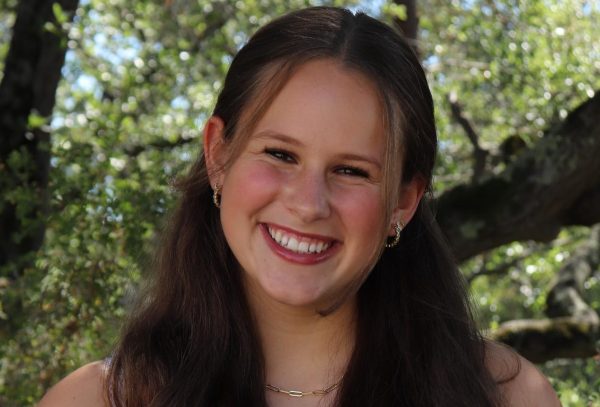
Junior Xia Snyder serves as the vice president of Jewish Student Union (JSU), and said that she has been involved in the organization since middle school. She said that the club has an important role in giving Jewish students community in an accessible way.
“I think that it’s important to have religious spaces like JSU to help people find community at school,” Snyder said. “It’s pretty easy to feel alone, especially with something that isn’t visible the same way that ethnoracial affinity may be.”
Snyder said that JSU has helped her connect with others through the shared Jewish experience.
“I think that we have a very nice little community and we’re all pretty tight knit at JSU because we meet every week and all our members come pretty regularly,” Snyder said. “We have events outside of school too, so I think I’ve gotten to know a lot of the Jewish underclassmen and upperclassmen which has been a very connecting experience.”
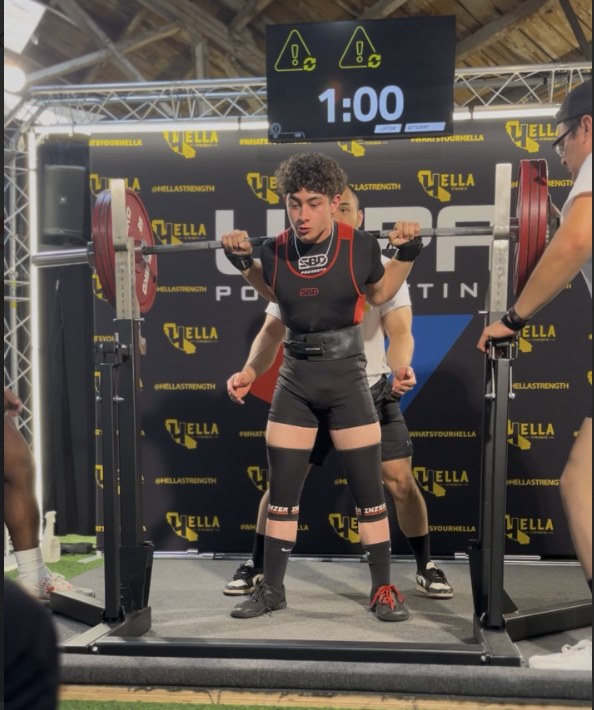
Like JSU, Christian Fellowship Club (CFC) serves as a safe space for Christian students seeking community. Junior Colin Amen founded CFC his sophomore year. The club meets Mondays at lunch in Mr. Keller’s room, with Amen serving as its central leader.
“I just didn’t see any sort of Christian organization on campus, and I wanted to bring that here to Piedmont. I think it’s important to encourage more people to explore faith, because that’s not something that is really too easy here in the Bay Area compared to other places,” Amen said. “I think it’s important to always have a space in every community for faith to exist, and hopefully CFC is a pathway that people can explore faith more themselves.”
Although CFC does serve as a space for exploration of Christian faith, Amen said that the club also serves as a place for students of every religion to have discussions about their beliefs.
“The club is really taking the direction of being a really open place for all faiths, which I really appreciate, even though we do talk about Christian values and stories,” Amen said. “Even though there aren’t organizations for every faith out there, a place like CFC is welcome to all, and we have students from many different faiths coming.”
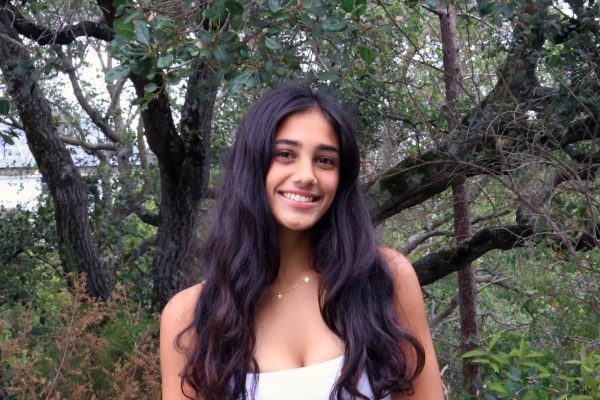
For many students, such as anonymous senior Alyssa, no group on campus exists that reflects their faith.
“I feel like I don’t know a lot of Hindu students, so I don’t really have people to relate to or talk to about things,” Alyssa said. “Our religion is heavily based on taking care of everyone, and everyone is family, so I feel like if those resources were there at school, it would be a very strong community, and I think that’s really important for people to have.”
While JSU and CFC are the only two religious groups on campus, other racial and cultural groups exist, which serve as a point of connection for minority students. In Alyssa’s case, there is a strong tie between her religion and her ethnicity, which led her to seek community from a racial group on campus.
“Not all people who are Indian are Hindu, but the majority of Hindus are Indian … There’s a lot of difference between how Asians and Indians or South Asians are perceived, so I tried to join ASU, and I was the only brown person there,” Alyssa said. “I feel like that was definitely different because there’s Asian representation but that doesn’t mean there’s South Asian representation.”
Alyssa said that her faith is very deeply intertwined with her culture, and that this experience has affected her perspective on faith and religion as a whole.
“There’s so many religions, and if people participate in something, and if they do something, it may just be what they’ve grown up with and what they do, and they don’t necessarily have to believe in it,” Alyssa said. “I feel like it’s important to accept that everyone is religious in different ways and everyone has a lot of different aspects of their religions because it’s so diverse.”
Anonymous senior Mary, who left the Mormon church at fourteen, said that she was often associated with her religion even though she did not believe in it.
“I never really wanted to go to church, but since my family went, I was fine with it. When I was younger, I didn’t really understand it,” Mary said. “In middle school, a lot of people would make fun of me for [being Mormon], even though it wasn’t something I agreed with. People found out that I grew up Mormon and I feel like I kind of got made fun of for that, even though I didn’t agree with any of the things.”
Mary said that in middle school she did research about her religion, which led her to leave the church.
“The longer you get out of Mormonism, you just kind of realize a lot of the things they believe in are very different,” Mary said. “It’s very conservative and promotes a lot of things I don’t personally agree with. The longer you get out of the church, the more you realize things that they’re doing aren’t okay.”
Mary said that leaving the church led her to be more interested in learning about religion as a whole, despite her lack of belief or involvement in any organized religion.
“It kind of made me more interested in learning about other people’s religions. Even though I don’t agree with them, I’m still always open to talk to people about what they believe in, and religion to me is interesting, even though I’m not associated with it at all,” Mary said. “I still do research on what’s going on in the Mormon church, even though I’m not involved in it at all.”
According to a TPH survey, 89% of religious students think their religion does not affect the way they perceive people of other faiths. 71% of non-religious students think that being non-religious affects the way they perceive others who are religious.
Amen said that one of CFC’s biggest goals is to serve as a space for open dialogue about all religions and to allow people of all faiths, including atheism, to learn about each other.
“There are a lot of people who are curious about learning more, so I try to do what I can to give people a pathway to learn more about religion as a whole and figure out what’s best for them,” Amen said. “It’s really important to be open to dialogue and actively interested in what other people of other faiths have to say, and to recognize the value in religion. I think everybody should realize how large of a part of everybody’s lives it is and the positives of practicing a faith.”
Amen said that his journey with faith extends far beyond his club.
“I see faith as a lifelong journey, so I’m trying to do what I can to grow closer to God at this stage of my life, and I think CFC is a large way I can do that,” Amen said.
With the involvement of religion in many students’ lives, some nonreligious students, like senior Laurel Minor, have been turned away from faith because of the way that some practicing devotees act.
“As someone who is LGBTQ+, it can be very scary to see a lot of what goes on online. There’s especially a hatred for a group of people based on a Bible verse that was interpreted many different times by many different people with many different biases, and especially when people don’t know the true meaning of their beliefs,” Minor said. “I think it can be very scary to go out in to the world and introduce myself to people because of that.”
As for why she is not religious, Minor said that she dislikes the belief in an omnipotent higher power.
“I like placing the worth of my actions in my own power, and I think that I’m responsible for how I move and how my life plays out,” Minor said. “I feel like a lot of religions are based on an idea that there’s a higher will of somebody, but I believe that I have that will instead.”