


















While many kids grew up receiving hand-me-downs, fighting over the front seat, and stealing each other’s clothes, only children experienced a different kind of childhood.
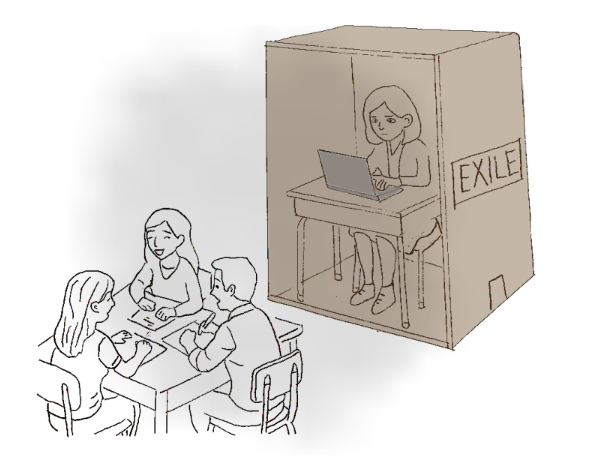
Sophomore Charlotte Zhang said that solitude is something that accompanies being an only child.
“I do enjoy being an only child, but it does get a little lonely sometimes,” Zhang said.
Sophomore Zofi Tinkoff said that being an only child has contributed to the introverted side of her personality, causing her to become comfortable with spending time by herself.
“I’ve just gotten used to [being alone],” Tinkoff said. “I think being alone just seems natural for me.”
Sophomore Aung Maung said that being an only child has a negative effect on him due to his more extroverted personality, causing him to feel bored, not just lonely.
“It bothers me because I’m social,” Maung said. “There’s no one to talk to and my friends don’t really live where I live.”
As only children grow from childhood into their teenage years, Tinkoff said their perspective on their situation tends to shift. Tinkoff said that the uniqueness of being an only child in Piedmont stuck out to her as a child, though it has become normal to her now.
“In elementary school, it was tough because almost everyone in my grade had a sibling, and I was one of the only people that didn’t. Even people who were only children eventually had [younger] siblings, so it was kind of a unique experience I had and I didn’t really know what to do with it,” Tinkoff said. “I think as I got older, I’ve just gotten used to it, and it really doesn’t affect me very much anymore.”
Zhang said that for her, being an only child never had much of an impact on her during her younger years because when she was young, it didn’t feel uncommon.
“When I was in elementary school, I didn’t think being an only child was that rare in Piedmont,” Zhang said. “I was just kind of oblivious to that.”
As students enter high school and college preparedness becomes one of the most prominent aspects of their lives, sophomore Quinn Wagener said that many students with siblings rely on their older brothers or sisters for tips and advice for preparing for college, making the college application process much less stressful.
“I definitely reach out to my brother since he is out of college now,” Wagener said. “I also text my sister and FaceTime her about upcoming courses and college stuff.”
However, Maung said only children do not get that luxury. Maung said that this absence of support forces himself to become more independent and figure things out on his own.
“I have to learn by myself,” Maung said. “I can’t rely on others, I just have to rely on myself for now and stand on my own feet.”
For some, though, support systems can extend past immediate family. Tinkoff said that for her, she has found a great support system in her cousins.
“I have two older cousins, one’s in college, and one’s in graduate school. They definitely have been helping me more with that [college preparedness],” Tinkoff said. “I mostly ask [my cousins] for help when it comes to those kinds of experiences.”
Tinkoff said that in being an only child, her cousins have filled the role a sibling should have for her, causing her to develop a very close bond with them.
“I’m definitely closer than I think a lot of people are with their cousins,” Tinkoff said. “I’ve talked to my cousins about things that you probably talk about with older siblings.”
Zhang said that having family members that are close to her age is crucial for guidance going into tough academic years.
“If I didn’t have older cousins to talk to, I would definitely be completely lost,” Zhang said. “Going into my junior year, I don’t know what to expect quite yet because I don’t really know anyone who has a similar experience that’s part of my immediate family.”
Tinkoff also said that the bond she has with her parents is unique due to their constant presence in her life.
“I would say my parents are very open with me. I feel like a lot of kids can’t really talk to their parents about everything, but I feel like I can,” Tinkoff said. “I’ve only had my parents my whole life, so I feel like I’ve been able to get really close to them.”
Though only children sometimes develop a close bond with their parents, Maung said it can cause increased attention and heightened focus from the parents onto the child as an individual. Maung said that sometimes, he feels no escape from the eyes of his parents.
“My parents are always focused on me,” Maung said. “They’re always watching.”
Tinkoff similarly said that she feels that being her parents’ only child causes her to lack the certain individual freedom and looseness that kids with siblings are given by their parents.
“I just think they’re a little bit more precautious when it comes to me hanging out by myself,.” Tinkoff said.
The individuality of being an only child does come with objective benefits, though. Maung said that the absence of siblings makes positive parental attention a constant factor as well, not just negative attention.
“You get all the attention you want,” Maung said. “If I want something, I can usually get it.”
Zhang said that a large benefit of being an only child is having private ownership over things
“You get privacy, you get your own space, and you don’t have to share,” Zhang said.
Tinkoff said that having her own space and free will is a large bonus of being an only child.
“I have my own room, which I really like,” Tinkoff said. “I can basically do whatever I want.”
Though there are many benefits to being an only child, Zhang said that being an only child is often accompanied by people assuming that her circumstance means she is “lucky”, ignoring the irreplaceability of an actual sibling bond.
“I think a lot of people, when they hear that you’re an only child, they go ‘You’re so lucky, you don’t have to do XYZ,’ but I kind of think about it in a different way where having a sibling really means you just have a forced companion,” Zhang said. “You get to create a special bond with [siblings] that you don’t really value until you’re older.”